Technical
How to Choose an LED Driver (And Why Yours Failed)
LEDs rarely fail. Drivers do — and almost always for one of four avoidable reasons, three of which are decided before anything is installed.
8 min readZiera INC
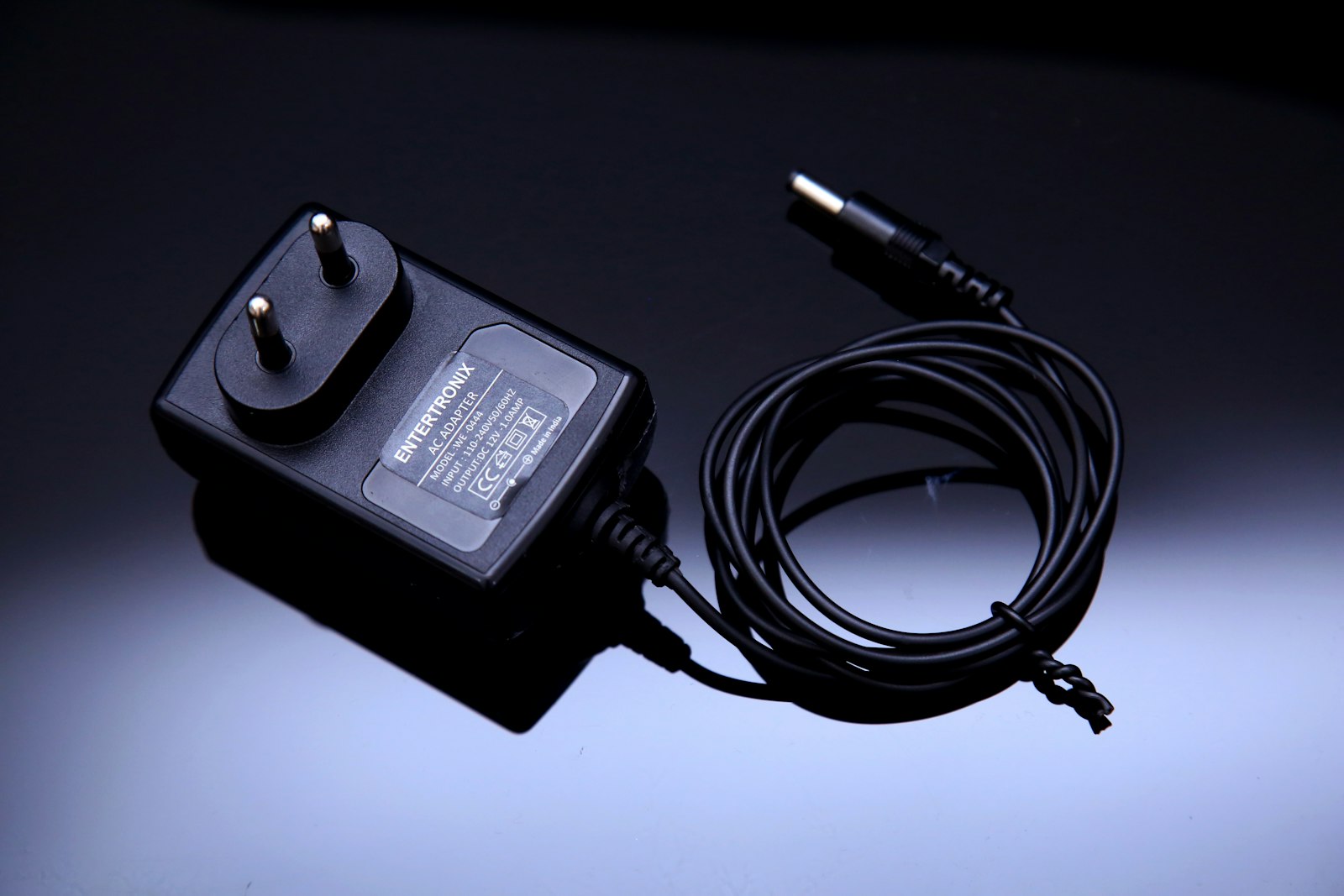
When a lighting installation fails, the fault is almost never the LED. Modern LEDs degrade slowly and predictably over tens of thousands of hours. Drivers fail outright, and they fail early, and in UAE conditions they fail earlier than the datasheet suggests. Every flickering cove, dead strip and dimmer that only works over half its travel traces back to the same handful of decisions.
First: which type do you need?
This is a binary choice and getting it wrong damages the fitting, so it comes before everything else.
| Constant voltage (CV) | Constant current (CC) | |
|---|---|---|
| Output | Fixed voltage: 12V, 24V or 48V | Fixed current in mA |
| Used for | LED strip, profile, magnetic track, sign modules | Individual downlights, spots, modules with their own driver requirement |
| Load | Varies with how much you connect | Fixed by the fitting |
| Sizing question | How many watts total? | What mA and forward voltage range does the fitting need? |
Sizing: the 20% rule, and why it is not conservatism
For a constant-voltage driver, add up the total connected wattage and specify a driver rated at least 20–25% above it.
- Find the strip's wattage per metre — 14.4W/m is a common figure.
- Multiply by the total run length. A 6m cove at 14.4W/m draws 86.4W.
- Add 25%: 86.4 × 1.25 = 108W.
- Specify the next standard size up — a 120W driver.
The headroom is not caution for its own sake. A driver running continuously at 100% of its rating runs hot, and heat is what kills the electrolytic capacitors inside it. That is the actual failure mechanism in the overwhelming majority of early driver deaths. In a UAE ceiling void, where the ambient is already high, a driver run at its ceiling has a materially shortened life.
The second reason is practical: clients extend runs. Headroom means an extra two metres of cove or two more track modules in year three does not require replacing the driver behind a finished ceiling.
Dimming: match the whole chain or do not dim at all
Dimming is where most compatibility problems live, because three separate components have to agree and they are usually specified by three different people.
| Protocol | Best for | Watch out for |
|---|---|---|
| TRIAC (leading/trailing edge) | Retrofit, apartments, single rooms on existing wall dimmers | Minimum load requirements; many old dimmers are designed for incandescent loads |
| 0-10V / 1-10V | Medium schemes wanting smooth deep dimming | Needs an extra control pair pulled to each driver |
| DALI | Large villas, retail, hospitality, anything with scenes and zoning | Higher cost and commissioning effort; needs a DALI bus and controller |
| PWM | RGB/RGBW and colour-changing strip | Low-frequency PWM can be visible on camera — a real issue in hospitality and retail |
The most common single cause of flickering LEDs is a TRIAC dimmer whose minimum load exceeds what the LED circuit actually draws. A dimmer designed for a 60W incandescent load may have a minimum around 25W; a 12W LED circuit sits below that and the result is flicker, buzz, or a dimmer that does nothing over the bottom half of its travel. The fix is an LED-rated dimmer with a low minimum load, not a bigger driver.
Where the driver lives
This is the decision that costs the most when it is made carelessly, because it is made once and it determines what a replacement costs for the life of the building.
- Accessible. A driver above sealed gypsum means cutting the ceiling open to replace a component that is expected to be replaced. Specify an access panel, a services void or a joinery compartment.
- Ventilated. Drivers need airflow. Sealed inside insulation or a closed box, they run hot and die early.
- Out of the sun. An IP67 driver in direct UAE sun far exceeds its rated ambient. Shade it or bring it indoors and run the low-voltage output out to the fittings.
- Grouped where sensible. Several drivers in one accessible enclosure is far easier to maintain than the same drivers scattered across a ceiling void.
Reading a datasheet properly
- Ta (maximum ambient temperature) — the single most important figure for UAE use. Reject anything rated below 40°C for a ceiling void or an exterior application.
- Tc (case temperature point) — where the manufacturer measures. Relevant to how the driver is mounted.
- Efficiency — typically 85–92%. The lost percentage becomes heat inside the enclosure you just specified.
- Power factor — above 0.9 for anything substantial; commercial supply arrangements may require it.
- Rated life at a stated temperature — usually given as hours at a particular Ta. That figure is meaningless without the temperature it was measured at.
- IP rating, if the driver is anywhere near damp or outdoors.
Diagnosing a failure
| Symptom | Most likely cause |
|---|---|
| Flickering at all levels | Driver/dimmer protocol mismatch, or non-dimmable driver on a dimmed circuit |
| Flickering only when dimmed low | Load below the dimmer's minimum |
| Far end of a strip run dimmer and warmer | Voltage drop — run too long, or 12V used where 24V was needed |
| Works, then drops out after warming up | Driver overloaded or overheating — thermal protection cutting in |
| Died within a year, no warning | Under-sized driver, or an unventilated and inaccessible location |
| Buzzing from the ceiling | TRIAC dimming incompatibility, or a driver mounted on a resonant surface |
From the catalogue
Drivers and control gear
Constant-voltage and constant-current drivers in 12V, 24V and 48V, dimmable on TRIAC, 0-10V and DALI, with matched controllers.
Browse driversQuestions
Frequently asked
- What size LED driver do I need?
- Total the connected wattage and specify a driver rated 20–25% above it. A 6m run of 14.4W/m strip draws 86.4W, so specify a 120W driver rather than a 100W one. The headroom keeps the driver cool — heat is what kills the capacitors inside it — and leaves room to extend the run later.
- What is the difference between a constant voltage and constant current LED driver?
- Constant voltage supplies a fixed 12V, 24V or 48V and is used for LED strip, profile, magnetic track and sign modules, where the current drawn depends on how much you connect. Constant current supplies a fixed mA and is used for individual downlights and spots. They are not interchangeable and using the wrong one damages the LEDs.
- Why do my LED lights flicker when dimmed?
- Most often the connected load is below the dimmer's minimum wattage — many TRIAC dimmers were designed for incandescent loads and need far more than an LED circuit draws. The other common causes are a non-dimmable driver on a dimmed circuit, or a driver and dimmer using incompatible protocols.
- Can I put an LED driver in a sealed ceiling void?
- You can, but you should not. Drivers need airflow and they are the component most likely to need replacing. Sealed above closed gypsum they run hot, fail early, and then require the ceiling to be cut open. Specify an access panel, a services void or a joinery compartment instead.
- Why did my LED driver fail after only a year?
- Almost always heat, from one of two causes: the driver was under-sized and running at 100% of its rating continuously, or it was installed somewhere unventilated. UAE ceiling voids already run at a high ambient, so a driver with no headroom and no airflow has a much shorter life than its datasheet implies.
Shop the categories