Technical
LED Strip vs LED Profile: Which One Does Your Detail Need?
They are the same tape. The aluminium channel around it changes how it looks, how long it lasts, and where you can legitimately use it — particularly in UAE heat.
7 min readZiera INC
This one confuses more clients than any other question in lighting specification, largely because the two products are frequently sold as though they were alternatives. They are not. An LED profile light is an LED strip inside an aluminium channel with a diffuser on the front. The tape is the same tape.
What the channel adds is three things — appearance, thermal management and protection — and whether you need them decides the specification.
What the channel actually does
It hides the dots
A bare strip is a line of discrete emitters. Look at it directly, or at its reflection in a gloss surface, and you see individual points of light. The frosted diffuser blends them into one continuous line. This is the reason most people think they want profile, and it is the least important of the three.
It sinks heat — which matters more here
LEDs do not fail from being on; they fail from being hot. Every LED loses output and shifts colour as junction temperature rises, and in the UAE the tape starts from a much higher ambient than the datasheet assumed. Aluminium extrusion conducts that heat away along its length. A strip run bare inside a sealed gypsum cove in a Dubai summer runs meaningfully hotter than the same strip in an aluminium channel, and it ages accordingly.
It protects and holds the line straight
Bare strip relies on its adhesive backing. In UAE heat that adhesive softens, and tape run along a gypsum edge or inside joinery will eventually sag or peel — usually somewhere you cannot reach. The channel takes the mechanical load and keeps the run straight, which is also what makes a long line look deliberate rather than approximate.
When bare strip is the right answer
- Deep cove where the strip is completely hidden and lights a ceiling — nobody sees the source, the ceiling does the diffusing, and there is airflow around the tape.
- Concealed accent behind a headboard, TV wall or mirror, where only the glow is visible.
- Temporary or event installations that will be removed.
- Low-wattage runs under about 9.6W/m in ventilated positions.
When you need the profile
- Anywhere the light line itself is visible as an element — a recessed ceiling line, a lit shadow gap, a linear pendant.
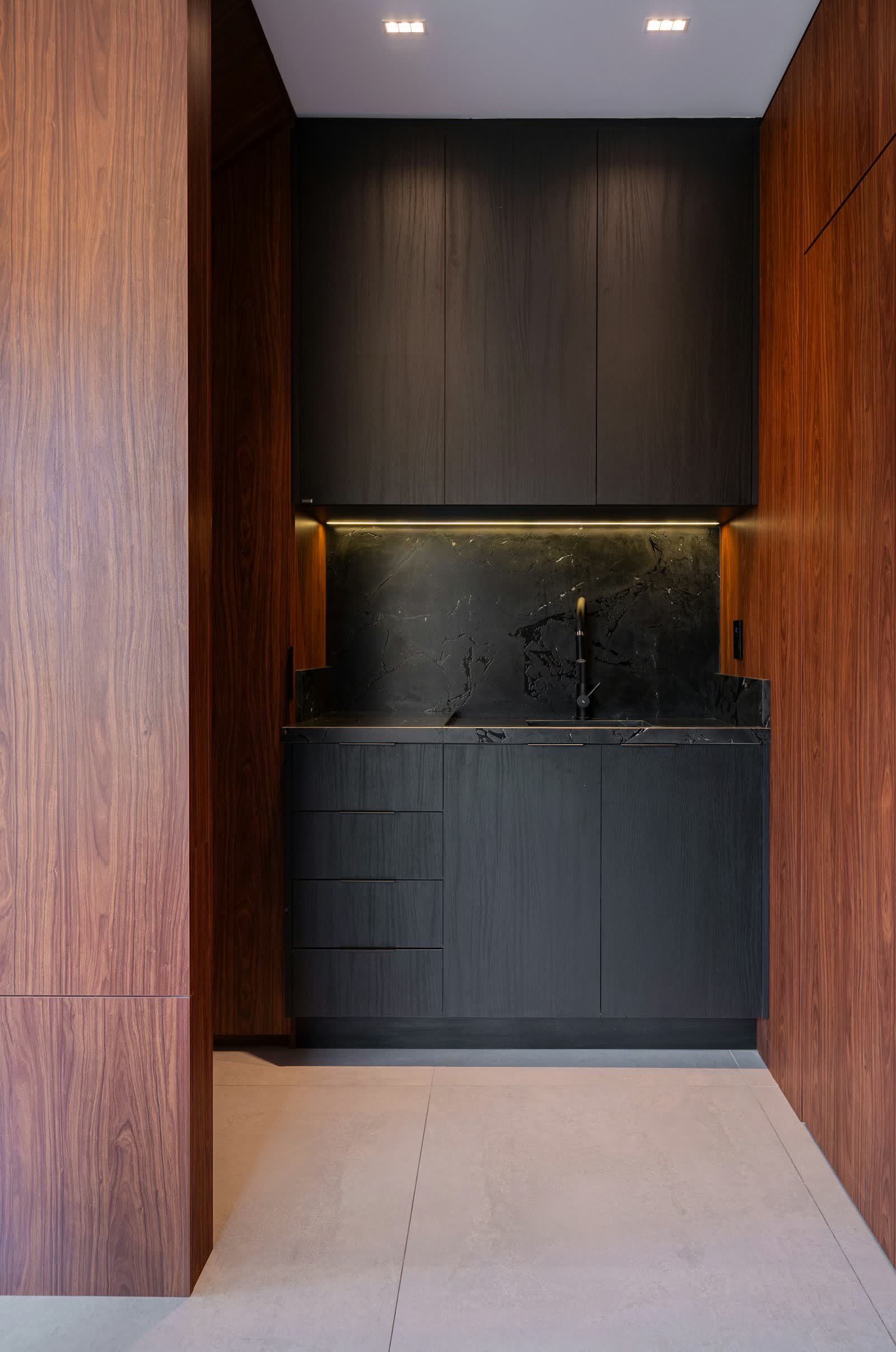
- Under-cabinet and inside joinery, where the strip is close to eye level and reflected in gloss worktops.
- Any run above roughly 14.4W/m, for thermal reasons alone.
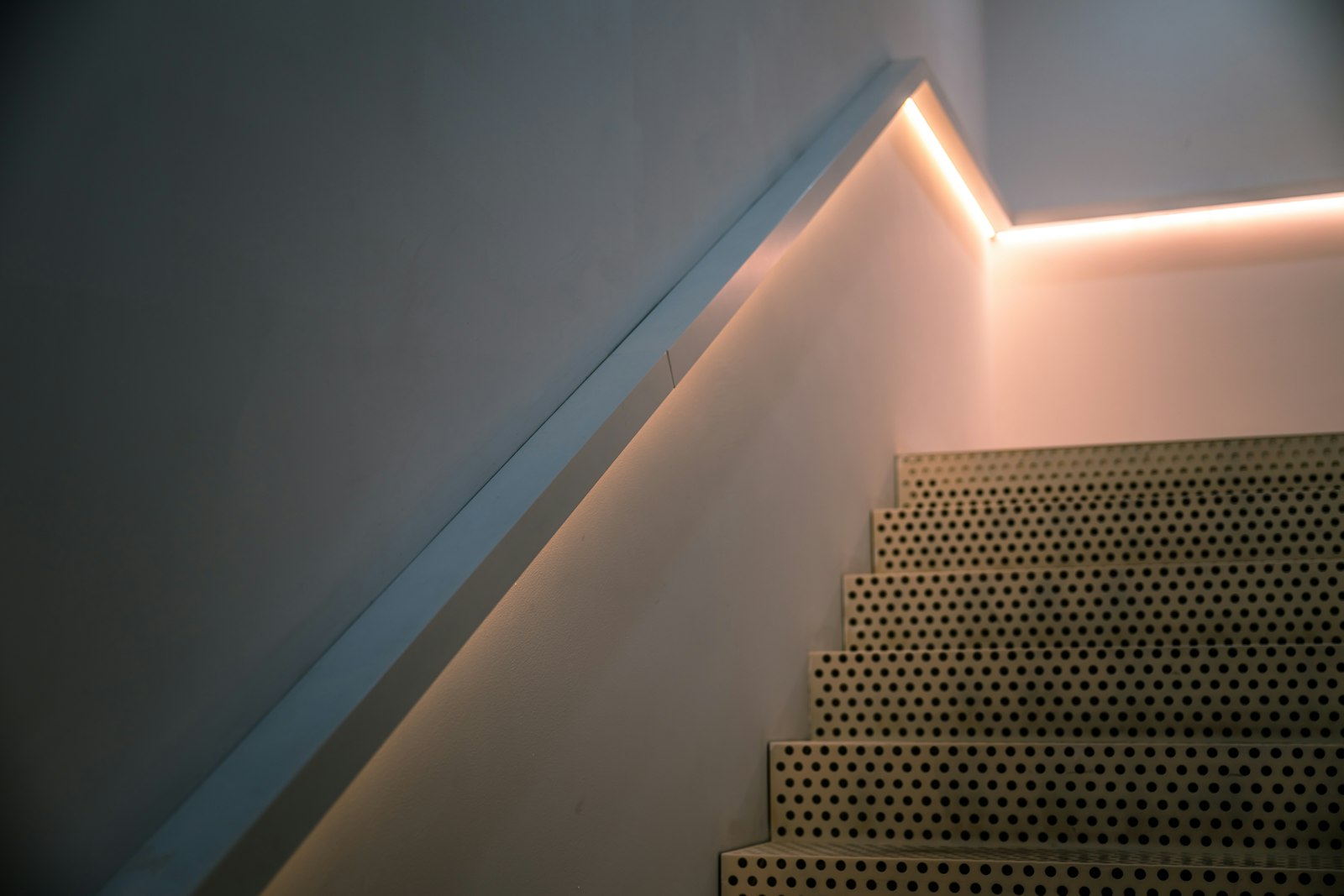
- Stair nosings, handrails and skirting details, which need mechanical protection.
- Enclosed details with no airflow, regardless of wattage.
- Anywhere a straight line is a design requirement over more than about two metres.
Profile formats
| Format | Use | Constraint |
|---|---|---|
| Recessed (plaster-in) | Flush trimless lines in gypsum ceilings and walls | Must be fixed before skimming — cannot be retrofitted |
| Surface | Joinery, reveals, retrofit, under-cabinet | Visible channel; finish must suit the surface |
| Suspended | Linear pendants over islands, desks, reception counters | Needs a fixing point and a considered drop height |
| Corner (45°) | Wall-to-ceiling junctions, inside cabinet corners | Beam aims diagonally — check what it lands on |
| Step / nosing | Stair treads and level changes | Needs coordination with the stair build-up |
Diffuser choice
The cover is a real specification decision, not a default. Clear covers pass the most light but hide nothing — you see every emitter. Frosted is the usual compromise. Opal diffuses most completely, at a cost of roughly 15–30% of the output, and is what you need when the fitting is at eye level or reflected in a polished surface.
The other half of the equation is the distance between emitter and diffuser. A deep channel gives the light room to mix, so even a standard-density strip reads as continuous. A shallow channel with the same strip will scallop. If a shallow profile is fixed by the detail, step up to high-density or COB tape.
The short version
Use bare strip when the source is fully hidden, the run is cool and ventilated, and nothing depends on a perfectly straight line. Use profile whenever the light line is seen, the location is enclosed, the wattage is high, or the run is long. In UAE conditions, when the decision is genuinely marginal, the aluminium is the safer specification — it is a small proportion of the installed cost and it is the part that determines whether the detail still looks right in five years.
From the catalogue
Profiles and strip
Recessed, surface, suspended and corner profiles with clear, frosted and opal diffusers — supplied with matched tape and drivers.
Browse profile lightingQuestions
Frequently asked
- What is the difference between LED strip and LED profile lighting?
- An LED strip is the bare flexible circuit board with visible emitters. An LED profile light is that same strip fitted into an aluminium channel with a diffuser cover. The channel hides the individual LEDs, dissipates heat away from them, and protects and straightens the run. The light source is identical; the channel changes how it looks and how long it lasts.
- Do I always need an aluminium profile for LED strip?
- No. Bare strip is fine in a deep, ventilated cove where the source is completely hidden and the wattage is modest. You need the profile when the light line is visible, the location is enclosed with no airflow, the strip runs above roughly 14.4W/m, or the run needs to be mechanically straight and protected.
- Does an aluminium profile make LED strip last longer?
- Yes, materially so in UAE conditions. LED life and colour stability are governed by junction temperature, and aluminium conducts heat away from the tape. The same strip run bare inside an enclosed detail in a Dubai summer runs significantly hotter — and dims and shifts colour faster — than one in a channel.
- Which diffuser should I choose for LED profile?
- Frosted covers most situations. Choose opal where the fitting is at eye level or reflected in gloss surfaces, accepting roughly 15–30% less output for a completely smooth line. Clear is only for deep channels or where maximum output matters more than hiding the emitters.
- Can LED profile be recessed into a ceiling after it is finished?
- Not the plaster-in type — recessed profile has to be fixed before the gypsum is skimmed so the board can be finished against its flanges. On a completed ceiling your options are surface-mounted or suspended profile, which is why the lighting detail needs to be agreed before the ceiling closes.
Shop the categories