Design
Kitchen and Cabinet Lighting That Actually Works
Under-cabinet lighting mounted at the back of the unit lights the splashback and leaves you working in your own shadow. That one detail decides the whole result.
6 min readZiera INC
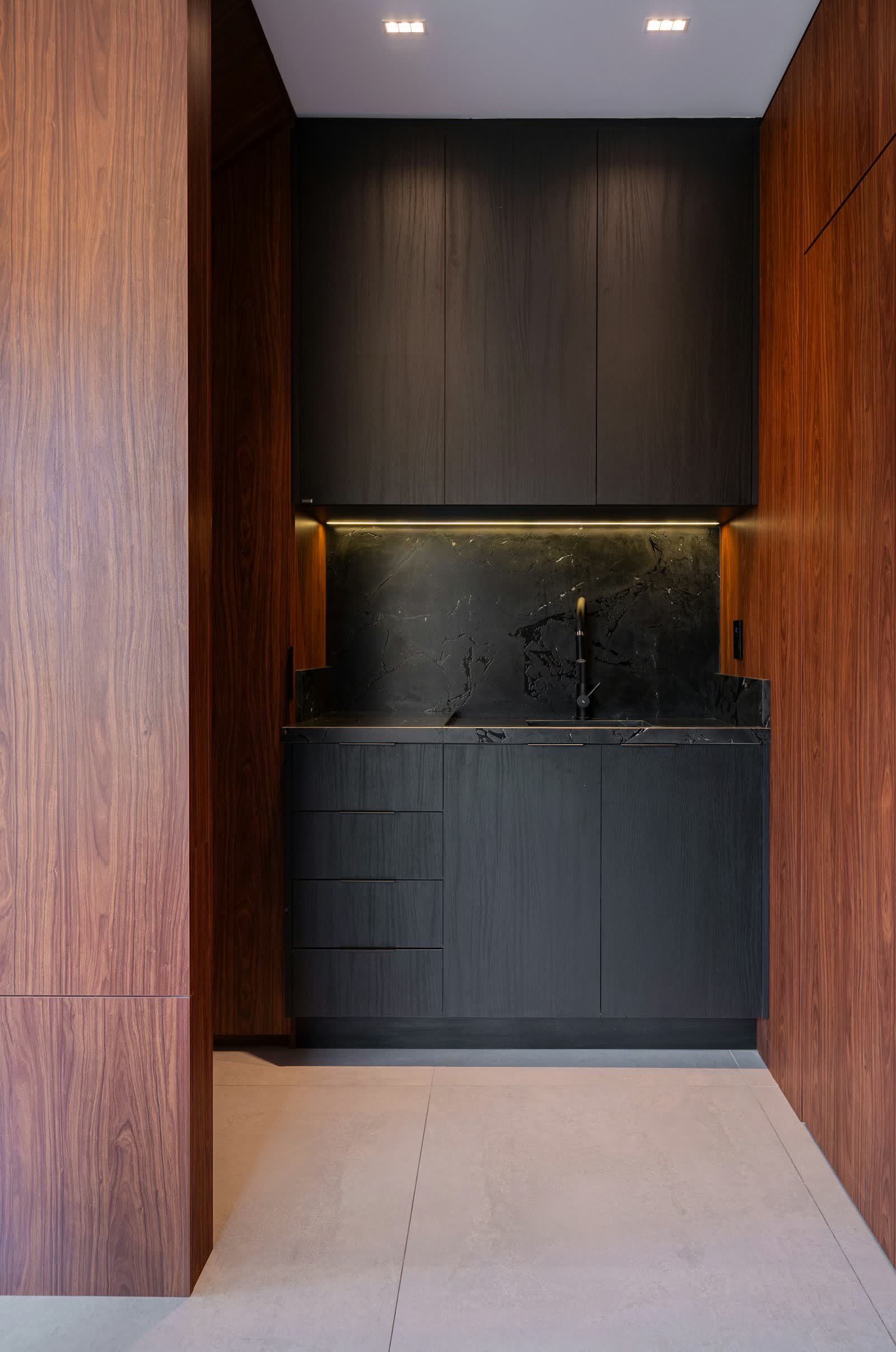
Ceiling downlights cannot light a kitchen worktop, because you stand between them and the work. Whatever the ceiling does, the useful light on a worktop comes from underneath the wall units — and that is true in every kitchen, at every budget.
Cabinet lighting is cheap relative to almost everything else in a kitchen and it changes the room more than most of it. The details below are what separate a result that works from one that produces a bright splashback and a shadowed chopping board.
Under-cabinet: the front-edge rule
Mount the strip as close to the front edge of the wall unit as the joinery allows. Mounted at the back — which is the default when nobody specifies otherwise — it lights the splashback beautifully and leaves the front half of the worktop, where the work happens, in your own shadow.
- Position at the front edge, behind a shadow-gap batten so the strip is not visible to anyone seated in the room.
- Use profile rather than bare tape. Under-cabinet strip is close to eye level and reflects in gloss worktops, so the diffuser is doing real work.
- Choose an opal diffuser if the worktop is polished stone or gloss. Frosted still shows individual emitters in a mirror-finish reflection.
- Run the full width of the unit. A strip that stops short of the ends leaves dark corners exactly where the worktop meets the wall.
Colour temperature and CRI
3000K to 4000K. In a closed kitchen, 4000K gives crisper task visibility. In an open-plan kitchen sharing a sightline with the living area, use 3000K throughout, because a cool zone at one end of an open space is immediately visible and looks like a mistake.
Specify CRI 90+ regardless. This is where you judge whether meat is cooked and whether vegetables are fresh, and low-CRI light makes food look grey. It is one of the few places in a home where colour rendering has a practical rather than aesthetic consequence.
Plinth lighting
A strip in the kickboard recess washing light across the floor. It does two things: it makes the run of units appear to float, and it gives a low-level night light that means nobody turns the main kitchen lights on at 2am.
Set it back far enough into the recess that the source is not visible from standing height, and use IP-rated tape — the plinth is where mopping water goes.
Shelf and display lighting
Open shelving and display cabinets take a strip or slim profile at the front underside of each shelf, lighting the shelf below. Mounting at the back lights the back panel and silhouettes whatever is on the shelf.
In glass-shelf display units, light from the top and let it pass down through the glass. In closed display cabinets with glass doors, mount vertically in the corners for even fill without visible sources.
Wardrobe and dressing lighting
Two rules make wardrobe lighting worth having at all.
- Sensor switching. A door-triggered sensor is the difference between lighting that gets used and a switch nobody remembers. It also eliminates the failure mode where lights are left on inside a closed wardrobe for weeks, cooking both the joinery and the tape.
- CRI 90+ at 3000K. A wardrobe is where you decide whether something is navy or black, and low-CRI light makes that genuinely impossible.
Mount vertically inside the door frame rather than horizontally at the top: vertical mounting lights the full height of hanging garments, where a top-mounted strip lights the shoulders and leaves everything below in shadow.
The driver problem
Joinery is the worst place in a house to bury a driver, and it is where drivers most often end up — screwed to the back of a carcass, behind a fixed panel, reachable only by dismantling the cabinetry.
- Plan a driver compartment at design stage: a plinth void, an end panel, or the back of a base unit with a removable panel.
- Size it with the usual 20–25% headroom.
- Keep it ventilated. A driver in a sealed timber box in a UAE kitchen runs hot.
- Tell the joiner where it goes. Left unspecified, it is placed wherever is convenient during installation, which is never anywhere accessible.
What to specify
- Under-cabinet profile at the front edge, behind a shadow-gap batten, full width of each unit.
- 3000K in open plan, 3000–4000K in a closed kitchen. CRI 90+ everywhere.
- Opal diffuser over gloss or polished worktops; frosted elsewhere.
- Plinth strip, IP-rated, set well back into the recess.
- Sensor-switched vertical strips in wardrobes.
- A named, accessible, ventilated driver location inside the joinery.
- Under-cabinet lighting on its own switch, separate from the ceiling.
From the catalogue
Cabinet and joinery lighting
Slim under-cabinet profiles, plinth and shelf strip, and sensor-switched wardrobe fittings with compact drivers.
Browse cabinet lightingQuestions
Frequently asked
- Where should under-cabinet lighting be mounted?
- As close to the front edge of the wall unit as the joinery allows, behind a shadow-gap batten. Mounted at the back it lights the splashback and leaves the front of the worktop — where you actually work — in your own shadow, which is the most common mistake in kitchen lighting.
- What colour temperature is best for kitchen lighting?
- 3000K to 4000K, with CRI 90 or above. Use 4000K in a closed kitchen for crisper task visibility, and 3000K throughout an open-plan kitchen so there is no visible cool zone at one end of the space. High CRI matters here because you are judging food.
- How bright should kitchen worktop lighting be?
- Around 300–500 lux at the worktop surface for real preparation work. That is noticeably brighter than the surrounding room, which is correct — the contrast between task and ambient light is what makes a worktop read as a work surface rather than a shelf.
- Should wardrobe lights turn on automatically?
- Yes. A door-triggered sensor is what makes wardrobe lighting actually get used, and it prevents lights being left on inside a closed unit for weeks, which overheats both the joinery and the tape. Mount the strips vertically inside the door frame so they light the full height of hanging garments.
- Where should the driver for cabinet lighting go?
- In a purpose-planned, ventilated and accessible compartment — a plinth void, an end panel, or a base unit with a removable back. Specify the location to the joiner at design stage; left unstated, the driver is fixed wherever is convenient during installation and becomes unreachable without dismantling the cabinetry.
Shop the categories