Design
Lighting a UAE Villa: A Room-by-Room Plan
A villa is not a large apartment. Double-height voids, a majlis, an outdoor life and constant dust each change what the lighting has to do.
9 min readZiera INC
Lighting advice written for European or North American homes transfers badly to a UAE villa. The typologies are different — a majlis has no real equivalent elsewhere — and so are the conditions. Daylight is intense and largely excluded during the day; the evening is when the house is used; ceilings are often high; outdoor space is used seriously; and dust is a permanent maintenance factor.
This is a room-by-room plan for that specific context.
Majlis
The formal reception room, used in the evening, usually with perimeter seating and frequently double height. It is the room where lighting matters most and where it is most often over-lit.
- Cove lighting around the perimeter at 3000K, dimmed. This is the primary layer and should be capable of carrying the room alone.
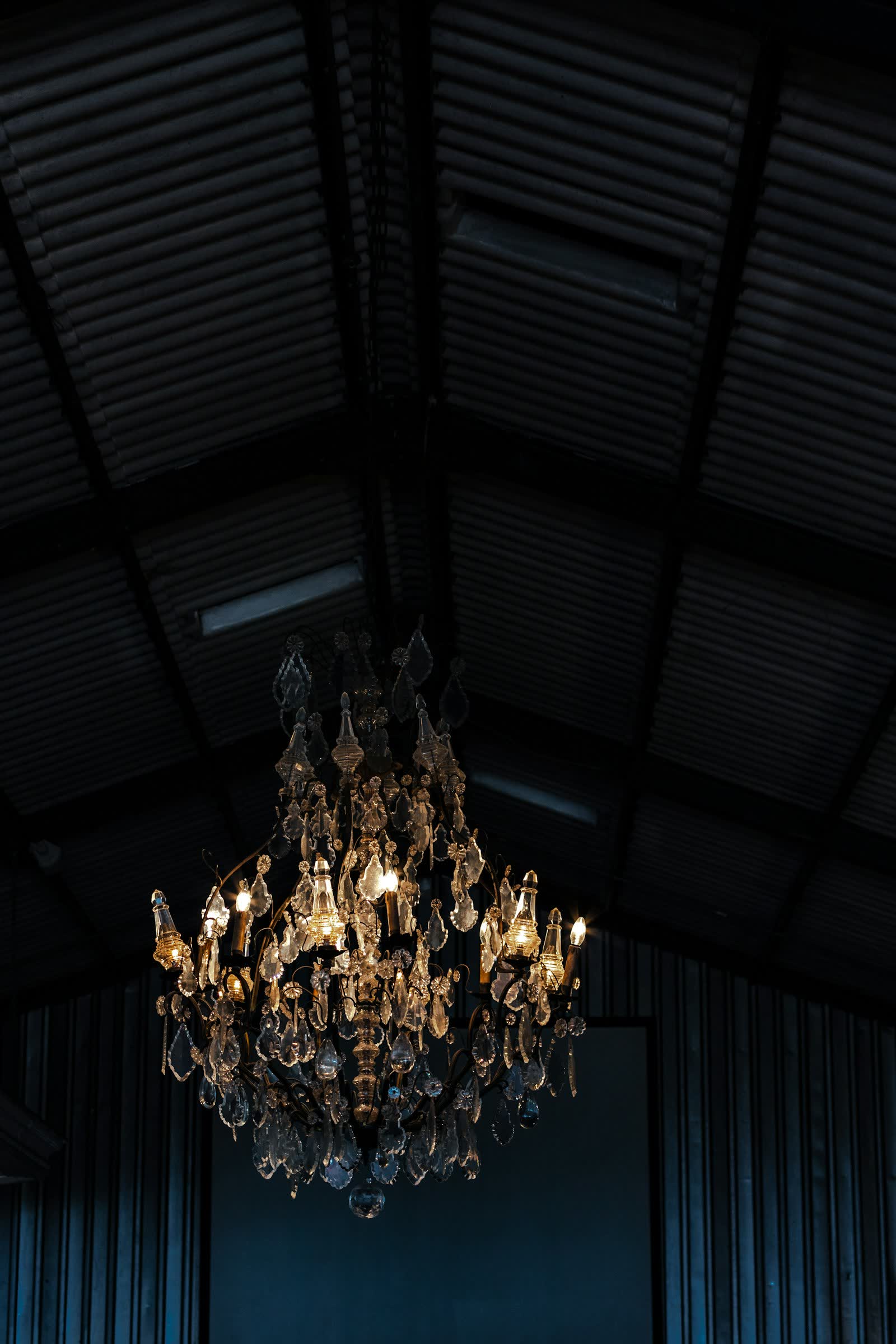
- A decorative chandelier scaled to the volume of the void, not to the furniture. On its own dimmer, run low.
- Wall lights at 1.6–1.8m between seating groups, adding vertical light at the level people actually sit.
- A small number of accent spots on artwork or a feature wall.
- Deep anti-glare downlights only where genuinely needed. In a room where guests sit and look up, glare is the primary risk.
- Four circuits minimum, all dimmed.
Living and family room
Used daily and informally, often open-plan onto the kitchen and dining. The scheme has to work for television in the evening and for daytime family use.
- Cove at 3000K as the ambient layer.
- Six to eight downlights placed to wash walls and light seating — not distributed on a grid.
- Accent lighting on the TV wall or feature stone. Lighting the wall behind a screen reduces eye strain considerably.
- Floor and table lamps for the low evening setting.
- Keep 3000K throughout if this space is open to the kitchen.
Kitchen
- Under-cabinet lighting at the front edge of the wall units, 300–500 lux at the worktop, CRI 90+.
- Ceiling downlights positioned over the working areas rather than in a grid, avoiding positions where you stand between fitting and worktop.
- Pendants over the island, hung 750–900mm above the counter.
- Plinth lighting for a low-level night setting.
- 3000K in open plan, 3000–4000K in a closed kitchen.
- Three circuits: ceiling, under-cabinet, plinth.
Dining
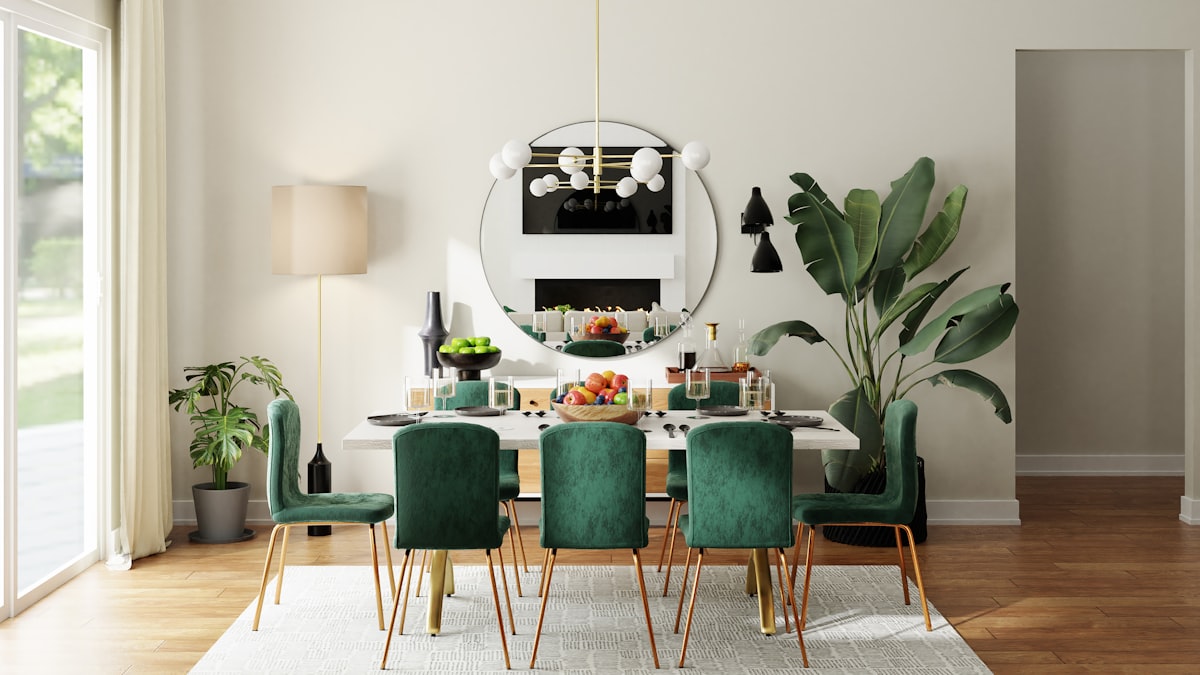
The one room where a single decorative fitting can legitimately dominate. A pendant or chandelier over the table, 750–900mm above the surface, sized to roughly half to two-thirds of the table width — scaled up if the ceiling is high. Support it with cove for ambience and one or two accent spots on a sideboard or artwork. Everything dimmed; a dining room at full output is unpleasant to sit in.
Bedrooms
- Cove at 2700–3000K, dimmed low. This is often the only light needed in the evening.
- Bedside reading lights at 1.1–1.3m, switched from the bed. Adjustable heads so light lands on the page, not the pillow.
- Minimal downlights — enough to find things, positioned away from the bed so nobody lies underneath one.
- Wardrobe lighting on door sensors, CRI 90+ at 3000K.
- Four circuits: cove, downlights, bedside, wardrobe.
Bathrooms
- Mirror lighting from both sides at face height — the single most important fitting in the room. Overhead-only lighting throws shadows into eye sockets and under the chin.
- 4000K and CRI 90+ at the mirror; 3000K elsewhere in the room.
- IP-rated fittings appropriate to the zone, particularly in and around the shower.
- Niche and under-vanity lighting for a low night-time level.
Stairs and double-height voids
The defining feature of many UAE villas, and the place where maintenance access has to be decided before anything is specified.
- Step lights or a handrail strip for the treads. Safety first, and it looks better than lighting stairs from above.
- A statement pendant or chandelier in the void, scaled to the volume — usually a custom drop, since the height is rarely standard.
- Wall lights up the stair wall for vertical light.
- Decide access at design stage. A fitting in a void that needs scaffolding to clean will be dirty within a year and stay that way.
Outdoor
Used most of the year, and the layer that most affects how the house reads from inside at night — an unlit garden turns every window into a black mirror.
- 2700–3000K throughout. Cooler light makes planting look grey.
- IP65 minimum, IP67 for in-ground and planting fittings, IP68 in the pool.
- Bollards or low-level markers on paths; uplighters on specimen trees; grazing light on boundary walls.
- Light fewer things deliberately. A uniformly lit garden has no depth; contrast is what makes it read at night.
- Corrosion-resistant housings — coastal air and irrigation are the two things that kill exterior fittings here.
What to fix before the ceiling closes
- Circuit split per room, every circuit dimmed. This is the decision that cannot be revisited.
- Reflected ceiling plan coordinated against ductwork, sprinklers and detectors.
- Cove profiles drawn with real dimensions, not indicated generically.
- Slab fixings and drop lengths for every pendant and chandelier, including the void pieces.
- Driver locations — accessible, ventilated, recorded on the as-built drawing.
- One colour temperature per visible space; changes at doors, never mid-room.
- CRI 90+ specified across every living area.
- Maintenance access resolved for anything above 3 metres.
From the catalogue
Specify a whole villa from one supplier
Send the reflected ceiling plan or the room list and we will quote the full scheme — interior, decorative and landscape.
Request a quotationQuestions
Frequently asked
- How should a majlis be lit?
- With cove lighting at 3000K as the primary dimmed layer, a decorative chandelier scaled to the volume of the void rather than the furniture, wall lights at seated eye level between seating groups, and a small number of accent spots. Use deep anti-glare downlights sparingly — in a room where guests sit and look up, glare is the main risk.
- What colour temperature should a UAE villa use?
- 3000K through living areas, majlis, corridors and bedrooms; 2700K for bedside and decorative fittings; 4000K only at bathroom mirrors, in closed kitchens and in home offices. Outdoors, stay at 2700–3000K so planting and stone are flattered. Change temperature at a door, never within one open-plan volume.
- How do I light a double-height void in a villa?
- A statement pendant or chandelier scaled to the volume — usually a custom drop, since void heights are rarely standard — supported by wall lights for vertical light and step or handrail lighting on the stairs. Resolve maintenance access at design stage: anything that needs scaffolding to clean will stay dusty.
- Why does my garden need lighting if nobody uses it at night?
- Because an unlit garden turns every window into a black mirror after dark, which visually shrinks the interior. Even a small amount of exterior light — one uplit tree, a grazed boundary wall — extends the apparent space of the rooms that look onto it.
- What is the most important lighting decision in a villa?
- The circuit split at first fix. Layers only exist if they can be dimmed independently, and that is fixed in the wiring before any fitting is chosen. Every other decision — fittings, colour temperature, even the cove detail — can be revised more easily than adding a circuit to a finished wall.